Saturday night, April 17
The Proof
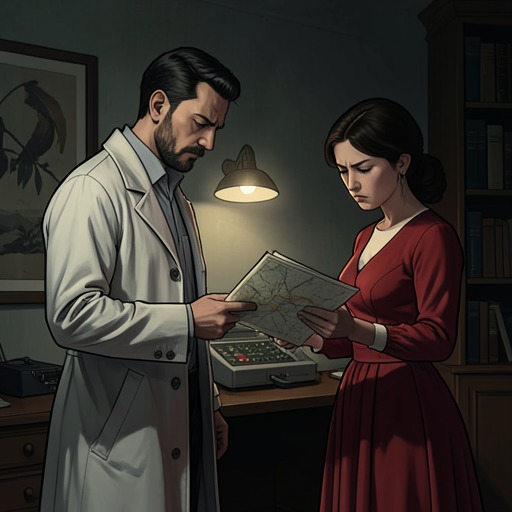
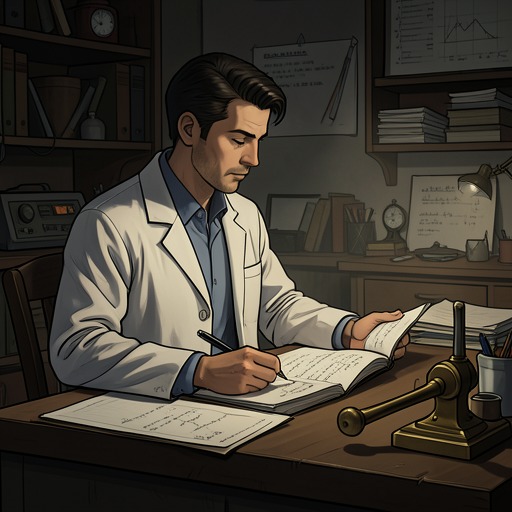
At the end of an exhausting mathematical effort, [Andrew Martin](entity:character-recall-character-6e4473f9d434) believes he has proved the [Riemann hypothesis](entity:concept-recall-concept-riemann-hypothesis-3428846625b6). He sends the result to [Daniel Russell](entity:character-recall-character-daniel-russell-e0e2214a75e7) before making it public, aware that the discovery could transform human knowledge and technology.
The breakthrough is the event that draws the attention of forces beyond [Earth](entity:location-recall-location-earth-a6b883af9147). It also puts the lives of the people who know about it in danger.
Shortly after the proof
The Abduction
After making his discovery, [Andrew Martin](entity:character-recall-character-6e4473f9d434) is abducted by the alien hosts and killed. They take a partial reading of his mind, enough for an operative to assume his body and identity but not enough to inherit all his memories.
The replacement is sent to [Earth](entity:location-recall-location-earth-a6b883af9147) to erase the proof and eliminate anyone who might preserve its contents. The original Andrew’s absence will be hidden behind an impostor who must learn how to pass as human.
Before the operative reaches Earth
The Mission
The hosts instruct the operative to stop human progress, beginning with the evidence of [Andrew Martin](entity:character-recall-character-6e4473f9d434)’s discovery. They warn him not to become emotionally involved, to maintain his distance, and to complete the killings required by the mission.
The assignment is framed as a rational safeguard: human mathematical progress is advancing faster than human psychological maturity. The operative accepts the logic, though he resents being sent away from his own painless world.
The first night on Earth
The Highway Arrival
The operative materializes naked on a dark English motorway, disoriented by weather, gravity, cold, and the unfamiliar body he now inhabits. Before he can locate Andrew’s computer, a car approaches and strikes him.
The impact briefly returns him to nothingness, but his alien abilities preserve him. His first experience of [Earth](entity:location-recall-location-earth-a6b883af9147) is therefore both a physical shock and the beginning of an education in human vulnerability.
Minutes after the collision
The Ambulance Escape
A passerby finds the injured operative and calls for help. When he wakes inside an ambulance, he tears away the heart-monitoring equipment, incapacitates the two medical workers, and escapes into roadside vegetation.
He has no language yet and mistakes the vehicle, its siren, and the surrounding traffic for baffling features of an uncivilized world. He realizes that simply moving around [Earth](entity:location-recall-location-earth-a6b883af9147) requires him to learn its physical and social rules.
The first night on Earth
The Petrol Station
Still naked, the operative wanders into a Texaco station and encounters a cashier, packaged food, and a magazine stand. He samples unfamiliar snacks, discovers his gag reflex, and learns English rapidly by reading [Cosmopolitan magazine](entity:object-recall-object-cosmopolitan-974d08c7117b).
When the cashier locks the door and calls the police, the operative opens it and flees. He takes a road map and heads toward [Cambridge](entity:location-recall-location-cambridge-9c17d42a788b), beginning to build an identity from the information transmitted by his employers.
The morning after his arrival
The Naked Wanderer
On foot in [Cambridge](entity:location-recall-location-cambridge-9c17d42a788b), the operative steals books from a shop and searches them for the mathematical discovery he has been sent to destroy. [Rain](entity:concept-recall-concept-rain-205c05bc1c5f) drives him through the gates of [Corpus Christi College](entity:location-recall-location-corpus-christi-colle-b0bf346097f5), where crowds and police gather around the naked stranger.
He announces that he is Professor [Andrew Martin](entity:character-recall-character-6e4473f9d434) and asks to see his wife and son. The claim brings laughter rather than recognition, making clear that he has already failed the instruction to blend in.
The morning after his arrival
Police Custody
Police officers make the operative dress and question him about his public nudity. He attempts to explain himself through fragments of newly learned language, including a bizarre appeal to the sexual advice he has read in the magazine.
A psychiatric assessment follows when he appears confused and claims to be Professor [Andrew Martin](entity:character-recall-character-6e4473f9d434). His nakedness, unfamiliarity, and inability to behave according to local expectations turn him into a presumed patient rather than a credible academic.
The first day on Earth
The Hospital Ward
At the hospital, the operative meets [Zoe](entity:character-recall-character-07e21b008911), a philosophy student who explains her voluntary admission and describes the other patients through their eccentric habits. Her account of Schopenhauer’s view of desire and suffering offers him an early, if incomplete, glimpse of human despair.
He also speaks with a patient who believes he comes from Tatooine, briefly hoping to find another alien before realizing the man is caught in a delusion. The encounter deepens his sense of isolation and his fear that [Earth](entity:location-recall-location-earth-a6b883af9147) can drive its inhabitants mad.
The first day on Earth
Isobel’s Visit
[Isobel Martin](entity:character-recall-character-isobel-martin-e2586f49d940) visits the hospital and finds her husband behaving like a stranger. The operative questions her about marriage, love, and their son, while she tries to understand why Andrew disappeared and what might have caused his breakdown.
Her concern unsettles him more than her appearance does. He recognizes that he must discover what she knows about the proof, even as he begins to sense that her care cannot be dismissed as mere irrationality.
Later on the first day
The False Diagnosis
The operative uses his mind-control abilities to persuade hospital staff that he is sane and has not lost his memory. He invents a plausible account of exhaustion and work pressure, receives medication, and secures his release into Isobel’s care.
The episode teaches him how easily humans can be guided toward answers they already expect. He leaves with the freedom to pursue his mission, but also with a new appreciation of how fear and social convention shape their judgments.
The first evening after the hospital
Home at Campion Row
At [4 Campion Row](entity:location-recall-location-4-campion-row-6e6469000247), the operative studies the household: Isobel, the absent [Gulliver](entity:character-recall-character-gulliver-2b8b9301e9c3), photographs, rooms, and the family dog [Newton](entity:character-recall-character-newton-149a82a13123). He learns that Andrew’s home life is full of details he does not remember and obligations he does not yet understand.
Isobel explains that Gulliver is staying with her mother and is upset. The operative conceals how little he knows about either of them, while the house’s ordinary warmth begins to complicate his determination to remain detached.
The first evening at home
The News
Watching television with Isobel, the operative sees that human news is dominated by war, money, and events close to the viewer’s home. The program also broadcasts footage of the naked professor, explaining the calls and attention surrounding the family.
He notices that the news excludes almost every other species on [Earth](entity:location-recall-location-earth-a6b883af9147). This narrowness confirms his prejudices, even as the distress it causes Isobel and [Gulliver](entity:character-recall-character-gulliver-2b8b9301e9c3) begins to make the story personal rather than merely observational.
The following evening
The Secret Office
After Isobel leaves for the supermarket, the operative accesses Andrew’s laptop and searches his correspondence and records. He finds no public trace of the breakthrough but learns how to reach [Fitzwilliam College](entity:location-recall-location-017ee309b9fe) and takes the keys needed to enter Andrew’s office.
He is still following the mission’s sequence, intent on removing the proof before deciding what to do about the people who may know it. His growing familiarity with the house’s primitive technology makes the next stage possible.
The following evening
The Proof Destroyed
At [Fitzwilliam College](entity:location-recall-location-017ee309b9fe), the operative finds Andrew’s file titled [Zeta](entity:object-recall-object-zeta-03767a310364) and reads the proof of the [Riemann hypothesis](entity:concept-recall-concept-riemann-hypothesis-3428846625b6). He recognizes that it is genuine and deletes it, briefly believing that he has saved the universe from a dangerous leap in human capability.
He also finds Andrew’s email to [Daniel Russell](entity:character-recall-character-daniel-russell-e0e2214a75e7), including the proof as an attachment. He deletes the message and its copy, then infects the computer so its contents cannot be recovered intact.
Immediately after deleting the proof
The Message to Daniel
The deleted email reveals that Andrew sent the result to [Daniel Russell](entity:character-recall-character-daniel-russell-e0e2214a75e7) and asked him to review it privately. The operative identifies Daniel as the most important remaining witness and realizes that destroying computer files alone will not finish the assignment.
The hosts reinforce the mission’s demands, telling the operative to behave like a prime number: isolated, indivisible, and unchanged by contact. He promises to obey, though his first experiences of human connection have already begun to alter him.
The next evening
The Family’s Fault Lines
Back at home, the operative asks Isobel whether Andrew had proved the [Riemann hypothesis](entity:concept-recall-concept-riemann-hypothesis-3428846625b6). She knows nothing definite, but explains that ambition, money, and glory have long driven her husband and that his academic rivalry with Daniel is intense.
Her account exposes the damage in Andrew’s marriage and his estrangement from [Gulliver](entity:character-recall-character-gulliver-2b8b9301e9c3). The operative learns that the proof may be only one part of a much wider family crisis, and that his disguise requires him to inhabit the consequences of the original man’s choices.
That evening
The Call from Daniel
The operative calls a number found in Andrew’s office papers and reaches a woman who knows him as the Naked Professor. Before he can establish her identity, [Gulliver](entity:character-recall-character-gulliver-2b8b9301e9c3) enters the room and interrupts the conversation.
Isobel later helps him contact [Daniel Russell](entity:character-recall-character-daniel-russell-e0e2214a75e7), who is eager to discuss Andrew’s extraordinary email. The operative agrees to visit Daniel in person, seeing the meeting as a necessary step toward locating and eliminating any surviving knowledge of the proof.
The following evening
Daniel’s Study
At Daniel’s home in [Babraham](entity:location-recall-location-babraham-d72769de65b3), the operative is welcomed by [Tabitha Russell](entity:character-recall-character-60ffc8f18887), who mentions Daniel’s previous heart attack and medication. The detail gives the visitor a ready-made explanation for the death he plans to cause.
In Daniel’s study, the mathematician confirms that he has examined Andrew’s work and regards it as a genuine breakthrough. The operative admits that [Andrew Martin](entity:character-recall-character-6e4473f9d434) is not the man standing before him, but Daniel dismisses the confession as evidence of a mental crisis.
The same evening
Daniel’s Death
The operative asks Daniel to slap his back, making the physical contact he needs to read him and briefly reveal his own alien face. He then paralyzes Daniel’s jaw and uses his abilities to trigger a fatal heart attack.
As Daniel collapses, the operative deletes the remaining proof from his computer. He leaves Tabitha trying desperately to keep her husband alive, confronted for the first time with the human reality of the death he has treated as a logical sacrifice.
Moments after Daniel’s death
Tabitha’s Grief
Tabitha holds Daniel as he dies, pleading with him to stay and reminding him of their coming trip to Egypt. The operative watches the intimacy between them and recognizes, with unease, that this mutual dependence may be what humans call love.
He leaves while Tabitha mourns and the ambulance arrives. Her grief follows him home, where it becomes a nightmare of dead humans and his own terror of being trapped in a mortal body.
That night
The Nightmare
For the first time in his life, the operative dreams of death. In the nightmare he walks among corpses, unable to return home and unable to eat, and fears that he too will die.
The dream unsettles the certainty on which his mission depends. Isobel touches him and comforts him, and the experience makes human fear feel less like an abstract weakness and more like a condition he may already share.
The next day
Newton Healed
The operative tries to win [Newton](entity:character-recall-character-newton-149a82a13123)’s trust by giving him a biscuit, then uses his abilities to restore the old dog’s sight and health. The effort leaves him exhausted, but Newton responds with affectionate licking and follows him closely.
The bond is both inconvenient and transformative. For the first time, the operative experiences an urge not merely to harm or observe but to heal, and he discovers that being loved by a dog can feel as bewildering as being rejected by one.
The next day
Music and Doubt
Alone with [Newton](entity:character-recall-character-newton-149a82a13123), the operative listens to music, including Holst, Bowie, jazz, and Debussy. The patterns affect him emotionally, and the beauty of [Clair de Lune](entity:expression-recall-expression-clair-de-lune-04c019f4a748) frightens him because it has been made by a species he was taught to despise.
The music loosens his certainty that human beings are only violent and greedy. He tries to restore his old judgment, but the experience has opened a path between reason and feeling that he cannot simply close.
Later that day
The Perelman Example
Searching online, the operative learns that [Grigori Perelman](entity:character-recall-character-7972a1c2206b) declined major mathematical prizes and chose a private life caring for his mother. The example directly contradicts the belief that humans are motivated only by money and fame.
His certainty weakens further when he shares food with [Newton](entity:character-recall-character-newton-149a82a13123) and enjoys it for the first time. Peanut butter, music, and companionship become small but decisive evidence that human pleasures cannot be dismissed as mere delusion.
The following day
The Train Tracks
While walking [Newton](entity:character-recall-character-newton-149a82a13123), the operative spots [Gulliver](entity:character-recall-character-gulliver-2b8b9301e9c3) away from school and follows him through the streets. Gulliver smokes, reaches a railway line, and stands dangerously close as a train rushes past.
The operative could intervene but holds back, telling himself that Gulliver may know about the proof and that the mission requires him to identify every possible witness. Gulliver walks away unharmed, while the operative recognizes that he has chosen observation over action for reasons he does not fully understand.
After the railway encounter
The Hosts’ Order
The operative reports that the proof and Daniel have been eliminated, but admits that [Gulliver](entity:character-recall-character-gulliver-2b8b9301e9c3) knows Andrew spoke of the discovery. He argues that the boy is unlikely to reveal it and that Isobel knows nothing.
The hosts reject his judgment and order him to kill both Isobel and Gulliver. He refuses at first, then promises to complete the task; he also uses his abilities to erase Gulliver’s memory of what Andrew told him, believing that this will remove the remaining danger.
That evening
The Mother’s Call
The operative calls Andrew’s mother and learns that the original Andrew had been complaining about Isobel and [Gulliver](entity:character-recall-character-gulliver-2b8b9301e9c3) to his parents. He hears how readily his mother takes his side, even though his wife has been caring for him and his son has been left emotionally neglected.
The conversation depresses him with its picture of human aging, illness, and family dependence. He hangs up without saying goodbye, then calls back to apologize, an impulsive act of courtesy that signals how far he has moved from his former indifference.
That night
The Sleepwalking Attack
The operative enters [Gulliver](entity:character-recall-character-gulliver-2b8b9301e9c3)’s room and attempts to hypnotize him into walking to the door and falling forward. Instead, Gulliver turns in his sleep and attacks him with fists, striking his head and body before waking in confusion.
Isobel arrives and tends the operative’s wounds. He could heal them instantly but lets them remain, partly to avoid suspicion and partly because the pain and her care have become strangely comforting.
After the sleepwalking attack
A Shared Bed
As Isobel tends his injuries, the operative apologizes for the past and future, then lies beside her. In the dark, he lets his little finger touch hers and imagines the connection he has never known in his own society.
He recognizes that he is losing his former identity and that the possibility of pain has made him vulnerable to love. He asks [the hosts](entity:character-recall-character-the-hosts-d4589682b4d0) for more time, arguing that human behavior is more complex than they believe and that understanding it could matter to their future decisions.
The following day
The Hidden Novel
While alone in the house, the operative finds an unpublished novel hidden in Isobel’s wardrobe. Its protagonist’s domestic frustrations and abandoned ambitions closely reflect Isobel’s own sacrifices as a wife and mother.
He tells her he has read it because he wants to understand her. She is embarrassed and angry that he crossed a boundary, while he begins to see how much of her life and talent has been concealed behind the roles she performs.
That day
Maggie’s Secret
A phone call from [Margaret Lowell](entity:character-recall-character-margaret-lowell-ff25031b78a1) reveals that she and Andrew have a private arrangement, including regular meetings on the first Tuesday of each month. The operative realizes that Andrew had a relationship with a student and that Isobel may know more than she says.
The revelation adds another layer to the broken marriage he is impersonating. He has to investigate the woman without exposing how little he knows about the original Andrew’s life.
The following Saturday
The Football Match
At a [Cambridge United](entity:organization-recall-organization-cambridge-united-9addd96d2698) match, the operative spends time with [Ari](entity:character-recall-character-e3d975c085ea), who discusses Andrew’s mental health and asks about his marriage. The operative quotes poetry and says that he loves Isobel, bewildering his friend with an uncharacteristic tenderness.
Ari reveals that Andrew had confided in him about an affair with a student, not about the mathematical proof. The operative is relieved that Ari does not know the dangerous secret, but learns how selfish and distant the original Andrew appeared to those closest to him.
After the football match
The Attackers
A man who recognizes the operative from the viral naked-professor footage approaches [Ari](entity:character-recall-character-e3d975c085ea) and insults them. When the man and his companions turn threatening, the operative uses his abilities to tighten the leader’s lungs until he backs away.
The intervention protects Ari but reveals how readily the operative can use power in anger. As rain begins, he panics and runs, still unable to tolerate the weather that once seemed merely unpleasant.
Soon after the football match
The Repaired Bulb
At home, Isobel drops a light bulb and the operative quietly restores the broken one with his abilities. She notices the oddity, but he turns the moment into a shared domestic joke rather than an explanation.
When she embraces him, he responds to her warmth instead of recoiling. The physical closeness makes the life he was sent to disrupt feel attractive, and deepens his attachment to the woman he is supposed to kill.
About a week after Daniel’s death
Daniel’s Funeral
The operative attends [Daniel Russell](entity:character-recall-character-daniel-russell-e0e2214a75e7)’s funeral with Isobel. She offers practical help to Tabitha, who is struggling to manage ordinary errands after her husband’s death.
Watching Isobel care for another grieving person forces the operative to see compassion as action rather than sentiment. Her kindness is another piece of evidence against [the hosts](entity:character-recall-character-the-hosts-d4589682b4d0)’ view that humans are defined only by selfishness.
The following Monday
The Lecture Hall
Back at [Fitzwilliam College](entity:location-recall-location-017ee309b9fe), the operative arrives late for a lecture and is mocked by a student who refers to his naked appearance. He answers with a comic explanation of the joke, then unexpectedly laughs with the class.
The laughter gives him a sense of acceptance and makes him wish he could tell Isobel about the experience. He abandons the scheduled topic to discuss Drake’s equation and the human assumption that advanced aliens must want to contact [Earth](entity:location-recall-location-earth-a6b883af9147).
After the lecture
Maggie’s Approach
[Margaret Lowell](entity:character-recall-character-margaret-lowell-ff25031b78a1) approaches the operative and refers to their meetings and a serious conversation they had before his breakdown. He asks what he told her, but she offers only teasing hints and gives no clear sign that she knows about the proof.
He concludes that she is not yet a threat to the mission. Even so, her intimacy with the original Andrew makes her presence unsettling and difficult to read.
Later that day
The Violet Warning
At the college cafe, [Ari](entity:character-recall-character-e3d975c085ea) argues that people resist the idea of alien life because it would end their belief that humanity is central to the universe. The operative nearly tells him the truth, but a burst of pain, ringing, and violet light overwhelms him.
He recognizes the episode as a warning from [the hosts](entity:character-recall-character-the-hosts-d4589682b4d0) and hides his identity from Ari. The incident confirms that the connection to his society remains active even as he becomes emotionally committed to [Earth](entity:location-recall-location-earth-a6b883af9147).
That evening
Gulliver’s Bruised Eye
[Gulliver](entity:character-recall-character-gulliver-2b8b9301e9c3) comes home with a bruised eye and refuses to explain what happened. Isobel is alarmed and wants to contact the school, while the operative initially says little, still bound by his mission and unwilling to betray the boy’s confidence.
He soon recognizes that his indifference is false: he cares about Gulliver’s safety. The warning episode has not restored his emotional distance; it has made him more conscious of the pain that binds people to one another.
That night
The Rooftop Rescue
The operative finds [Gulliver](entity:character-recall-character-gulliver-2b8b9301e9c3) on the sloping roof after the boy has taken his [Diazepam](entity:object-recall-object-diazepam-36a367ac47e7) and left an apology note. Gulliver speaks of a rare good memory from a family holiday and of feeling stupid, worthless, and unable to face life.
As Gulliver loses consciousness and falls, the operative follows him, breaks his own legs, and uses his abilities to revive the boy after his pulse has stopped. The rescue is an act of hope that directly opposes the mission’s logic of elimination.
Immediately after the rooftop rescue
The Choice to Stay
Exhausted and near collapse, the operative hides in the garden while Isobel tends to [Gulliver](entity:character-recall-character-gulliver-2b8b9301e9c3). His body begins reverting toward its original alien form, and he realizes he could return home if he chose to do so.
He refuses [the hosts](entity:character-recall-character-the-hosts-d4589682b4d0)’ summons and asks to be disconnected from his abilities. They warn that he will become mortal, age, and suffer, but he accepts those costs and chooses to remain human rather than return to painless immortality.
The next day
The Family Reckoning
Isobel tells the operative that [Gulliver](entity:character-recall-character-gulliver-2b8b9301e9c3) can come home from the hospital and asks why he risked his own life on the roof. She challenges the idea that the family’s crisis began with one public breakdown, describing years of Andrew’s absence and neglect.
The operative accepts her account and apologizes, trying to understand the damage the original Andrew caused. Isobel admits that his rescue of Gulliver mattered, while he promises to make an effort with the boy.
Soon after Gulliver returns home
The Facebook Retaliation
The operative hacks into [Gulliver](entity:character-recall-character-gulliver-2b8b9301e9c3)’s [Facebook](entity:organization-recall-organization-facebook-72fee13d0373) account and retaliates against the students who bullied him by changing their names and restricting their messages. The act is petty, inventive, and unlike anything he would have done in his former life.
Gulliver suspects what happened and nearly smiles. The small alliance gives the boy a sign that someone is finally taking his side, even if the operative has chosen an ethically questionable way to show it.
A few days later
Gulliver Faces Theo
In the park, [Gulliver](entity:character-recall-character-gulliver-2b8b9301e9c3) explains the pressure of being judged by his famous father and describes how little support he has felt at home. When Theo Clarke appears and mocks him, the operative urges Gulliver to stand up to the boy who once hurt him.
Gulliver first hesitates, then fights back and leaves Theo bleeding. The operative is disturbed by how close violence lies beneath human restraint, but sees Gulliver’s willingness to act as a movement away from the helplessness that had brought him to the roof.
Soon after the fight
The Wine in the Garden
The operative and Isobel sit outside with Australian wine, and he drinks too much while discovering how alcohol softens his fears and aches. Their teasing conversation about his old snobbery lets them share a brief, relaxed intimacy.
The evening shows him how human pleasures can be entangled with excess and regret. For a while, however, he is simply present with Isobel, rather than observing her as an alien specimen.
The next morning
The Watcher
Hungover, the operative senses someone watching the house and sees a hidden figure near a parked car. He runs outside, but the person escapes before he can identify him.
The sight leaves him uncertain whether he is becoming too human to detect danger or whether a sharper presence is tracking him. The possibility that another nonhuman has arrived gives the family’s fragile domestic life a new, unseen threat.
The following days
Isobel’s Impossible Life
Watching Isobel work, the operative considers the extraordinary chain of chance that made her existence possible. He sees her not as a collection of cells but as a singular life shaped by childhood, scholarship, love, and sacrifices she rarely discusses.
The recognition makes him understand her beauty as inseparable from mortality and time. He nearly confesses his origins, but instead asks whether they should buy a new sofa, unable to risk destroying their renewed closeness.
Several nights later
The Intruder
Isobel wakes the operative because she believes someone is inside the house. He searches the rooms but finds no intruder, only her laptop open and still glowing after she had closed it.
He conceals his concern when he returns to bed. The unexplained access confirms that the watcher has entered the family’s private space and may be monitoring them through the technology [the hosts](entity:character-recall-character-the-hosts-d4589682b4d0) retained.
The following day
The Family Evening
[Gulliver](entity:character-recall-character-gulliver-2b8b9301e9c3) plays Nirvana’s All Apologies for his mother and the operative, keeping time with focused skill. The performance briefly draws the family together and gives the operative a moment of relief from the danger surrounding them.
Later, Isobel and the operative see Hamlet and share dinner. She recalls their first date and their earlier life together, while he longs to have been the man she remembers and struggles to tell her the truth.
Later that evening
Zoë’s Street Fight
On the walk home, the operative and Isobel encounter [Zoe](entity:character-recall-character-07e21b008911) arguing with a violent partner. Isobel tells the man to leave them alone, but he grabs and insults her.
The operative steps in despite having lost his abilities. The man beats him badly, leaving him unconscious in the street and forcing him to experience physical helplessness without the possibility of healing himself.
That night
The Hospital Confession
The operative wakes in an ambulance and then in hospital, where doctors investigate unusual activity in his brain. His injuries confirm that the disconnection has made him physically vulnerable like any human.
When [Ari](entity:character-recall-character-e3d975c085ea) visits, the operative tells him plainly that he is from another planet and has lost his powers. Ari laughs and assumes it is a delusion, leaving the operative with the knowledge that even an open-minded friend may be unable to accept an impossible truth.
The following day
Maggie’s Affair
Still bruised, the operative returns to [Fitzwilliam College](entity:location-recall-location-017ee309b9fe) and meets [Margaret Lowell](entity:character-recall-character-margaret-lowell-ff25031b78a1), who takes him to the [Hat and Feathers](entity:location-recall-location-hat-and-feathers-828c5788f201). She speaks openly about sex, and he follows her home without understanding the emotional consequences of what he is doing.
During sex, he realizes that he does not want the experience and stops. He returns home and tells Isobel the truth, but his confession does not undo the betrayal or the years of damage behind their marriage.
That evening
The Marriage Breaks
Isobel reacts to the confession with disbelief, anger, and grief. The operative tries to explain that his unfamiliarity with human fidelity is not an excuse, but she hears only another betrayal by the man she thought she knew.
She tells him to leave the house and their lives. The operative walks away with [Newton](entity:character-recall-character-newton-149a82a13123)’s warning bark behind him, having lost the family home just as he had begun to believe he belonged there.
That night
Winston Churchill
After buying wine, the operative sits on a park bench beside a homeless man who calls himself [Winston Churchill](entity:character-recall-character-winston-churchill-02719856506e). They talk about lost families, drinking, pain, and the difficulty of loving someone who no longer wants to see him.
The operative tries to heal the man’s damaged leg but discovers that his abilities are gone. Winston recognizes him from earlier and leaves him with a painful reminder that good intentions cannot restore what has been lost.
The same night
Ari’s Death
The operative calls [Ari](entity:character-recall-character-e3d975c085ea)’s home and learns from a grieving woman that Ari is dead. He realizes [the hosts](entity:character-recall-character-the-hosts-d4589682b4d0) have been listening despite claiming to disconnect him and have punished Ari for hearing the truth about his origins.
He runs back to the Martin home, fearing that Isobel and [Gulliver](entity:character-recall-character-gulliver-2b8b9301e9c3) are next. The mission has changed from a distant threat to an immediate danger inside the family he has chosen to love.
That night
The Replacement Revealed
Inside the house, the operative finds an identical [Andrew Martin](entity:character-recall-character-6e4473f9d434) sitting on the purple sofa. The newcomer identifies himself as a replacement sent to complete the mission and admits that he has been living under the name [Jonathan Roper](entity:character-recall-character-jonathan-roper-84b0c237eee6) with a human woman.
He explains that [the hosts](entity:character-recall-character-the-hosts-d4589682b4d0) ordered him to kill anyone the operative told about his origins. He regards humanity as too violent and contradictory to be trusted, and intends to kill [Gulliver](entity:character-recall-character-gulliver-2b8b9301e9c3) and Isobel before their knowledge can spread.
Minutes after the replacement is revealed
The False Alliance
The replacement argues that humans will eventually use mathematical progress to dominate other life, and the operative recognizes the force of the argument. He appears to agree that the mission must continue and says he will help kill [Gulliver](entity:character-recall-character-gulliver-2b8b9301e9c3).
In truth, he is buying time. He describes Gulliver’s habits and the house’s layout, then tells the replacement to turn on the television, preparing to use human sound technology against the alien abilities in the newcomer’s left hand.
That evening
The Radio Counterattack
When [Gulliver](entity:character-recall-character-gulliver-2b8b9301e9c3) returns home, the replacement begins to hypnotize him and order him to take a knife and cut his wrist. Hidden nearby, the operative switches on a clockwork radio tuned to classical music, disrupting the mental control.
He enters the kitchen as the replacement holds Gulliver and tells the boy that neither man is his father: the real Andrew is dead, and both aliens were sent to kill him. Gulliver hesitates, caught between the two identical figures and the impossible account.
Seconds later
Gulliver’s Counterattack
The replacement orders [Gulliver](entity:character-recall-character-gulliver-2b8b9301e9c3) to ignore the operative and turn off the radios. As the operative is struck and loses his balance, Gulliver remembers the changed leaf and roars with determination.
He takes the knife and drives it into the replacement’s back. The act is both a desperate defense and Gulliver’s first decisive response to the violence that has repeatedly made him feel powerless.
Immediately after the stabbing
The Burning Hand
The replacement is still dangerous because the alien technology remains active. The operative and [Gulliver](entity:character-recall-character-gulliver-2b8b9301e9c3) force his hand onto the hot surface of the [Aga cooker](entity:object-recall-object-aga-cooker-bd38eed7860d), destroying the technology as he loses consciousness.
The operative then burns his own hand on the same surface, sacrificing the remaining alien connection so [the hosts](entity:character-recall-character-the-hosts-d4589682b4d0) can no longer monitor him. The cost is severe pain and a permanent commitment to a mortal human life, but it cuts off the surveillance that made the family vulnerable.
That night
Isobel Sees the Truth
Isobel arrives home and discovers the aftermath: [Gulliver](entity:character-recall-character-gulliver-2b8b9301e9c3), the operative, and the corpse of a being that does not look human. The operative explains the abduction, the mission, and his choice to protect her and Gulliver.
She cannot absorb the revelation as a coherent story. Her husband is dead, the man she trusted is an alien, and the familiar reality on which her life depended has collapsed.
Later that night
The Body Is Buried
The operative and [Gulliver](entity:character-recall-character-gulliver-2b8b9301e9c3) drag the replacement’s body outside while [Newton](entity:character-recall-character-newton-149a82a13123) watches. The alien corpse begins to revert toward its original form, making the violence they have committed both undeniable and difficult to comprehend.
Isobel witnesses enough to understand that the explanation is not a simple breakdown. Her grief and disbelief soon overwhelm her, and she withdraws from the operative even though his choices saved her and her son.
The weeks after the replacement’s death
Gulliver’s Questions
[Gulliver](entity:character-recall-character-gulliver-2b8b9301e9c3) accepts the alien truth more readily than Isobel, though he worries about what happened to his biological father. The operative reassures him that Andrew did not suffer, while recognizing that he cannot know whether this is true.
Gulliver asks where the operative came from, and the two use fruit to imagine the scale of the distance between [Earth](entity:location-recall-location-earth-a6b883af9147) and his home. The boy begins to understand that the alien has no way back and has chosen to remain with them.
Before the operative leaves the house
The Advice List
Knowing he cannot remain in the family home, the operative types a long list of advice for [Gulliver](entity:character-recall-character-gulliver-2b8b9301e9c3). It urges him to reject shame, remain curious, seek art and kindness, value love over status, and remember that his life matters.
The list also records what the operative has learned on [Earth](entity:location-recall-location-earth-a6b883af9147): that humans are contradictory, mortal, and capable of caring for one another. Its final message tells Gulliver that he is loved, offering the boy a form of fatherly care the original Andrew rarely gave him.
Soon after the replacement’s death
The Brief Farewell
The operative packs Andrew’s clothes and leaves the Martin home. Isobel allows a short embrace but remains unable to restore the trust between them, while [Newton](entity:character-recall-character-newton-149a82a13123) watches him go with obvious sorrow.
The departure is a deliberate act of care: the operative believes his presence is prolonging Isobel’s pain. He carries away both the family’s secrets and the knowledge that he has become attached to the people he was sent to destroy.
The following years
A Human Life in California
The operative settles in California and takes a teaching position at [Stanford University](entity:location-recall-location-stanford-university-9e4fa2e2eedb). He avoids major mathematical advances that could accelerate human technology, while living alone among plants, books, music, wine, and memories of Isobel and [Gulliver](entity:character-recall-character-gulliver-2b8b9301e9c3).
He grows old and emotionally vulnerable, experiencing illness, loneliness, and ordinary pleasures without the powers that once protected him. Emily Dickinson’s poetry and the natural world become companions through which he continues to make sense of his chosen human life.
About a year later
The Return to Cambridge
Invited to [Cambridge](entity:location-recall-location-cambridge-9c17d42a788b) for academic lectures, the operative argues publicly that mathematics is dangerous territory and that human progress should not rush ahead. He sees [Margaret Lowell](entity:character-recall-character-margaret-lowell-ff25031b78a1) but declines her invitation to the [Hat and Feathers](entity:location-recall-location-hat-and-feathers-828c5788f201).
Later, he glimpses Isobel across the street as she gives money to [Winston Churchill](entity:character-recall-character-winston-churchill-02719856506e). She does not notice him, and the brief encounter intensifies his longing for ordinary life with her rather than diminishing it.
That afternoon
Winston’s Bench
The operative follows [Winston Churchill](entity:character-recall-character-winston-churchill-02719856506e) to a park bench and talks with him in the rain. Winston describes losing his home, job, partner, and child, while the operative speaks of having given up eternal life without yet understanding why.
Winston asks for money and leaves, and the operative remains behind, considering what function he has in the universe now. He realizes that staying human will require further change rather than a return to his old habits of detached observation.
That evening
Gulliver’s Return
[Newton](entity:character-recall-character-newton-149a82a13123) approaches the operative, and he instinctively tries to heal the dog’s returning arthritis, only to discover that his abilities are truly gone. [Gulliver](entity:character-recall-character-gulliver-2b8b9301e9c3) arrives and tells him that he has read Emily Dickinson and has not tried to kill himself again.
Gulliver says that Isobel misses the operative and admits that he misses him too. Their conversation gives the operative the invitation he has been longing for, though neither boy nor man can pretend that the past has been repaired.
The ending
The Walk Home
[Gulliver](entity:character-recall-character-gulliver-2b8b9301e9c3) leaves with [Newton](entity:character-recall-character-newton-149a82a13123), telling the operative that he knows where they live. The operative remains beneath the evening sky, aware that his mortal days are limited and that he wants a life shared with people who care for him.
He decides to go home. The decision does not restore the old family or erase the harm he caused, but it gives his chosen human life a direction: belonging, love, and the present moment rather than the sterile safety of eternity.